What it Means to be a Priest in Bali
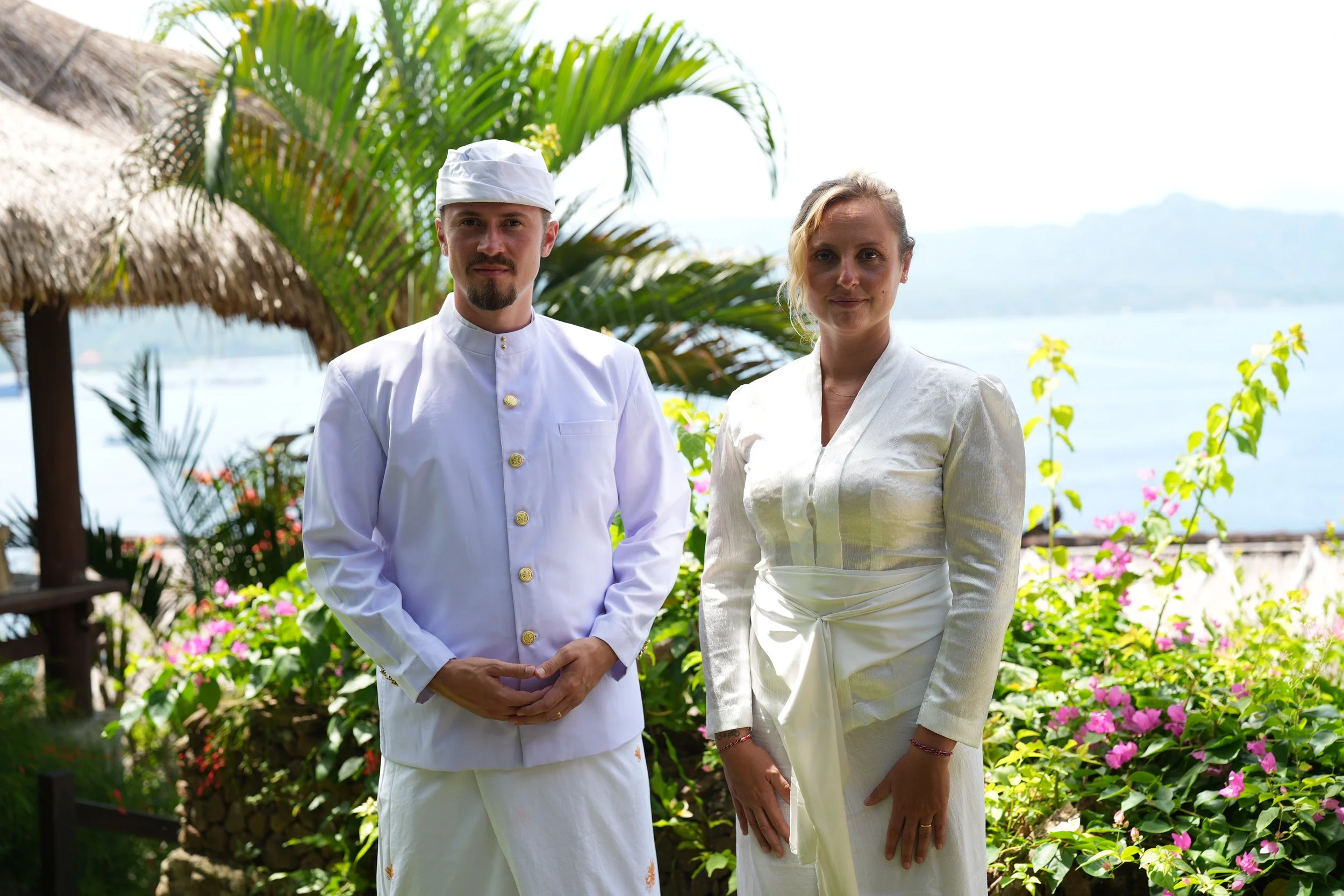
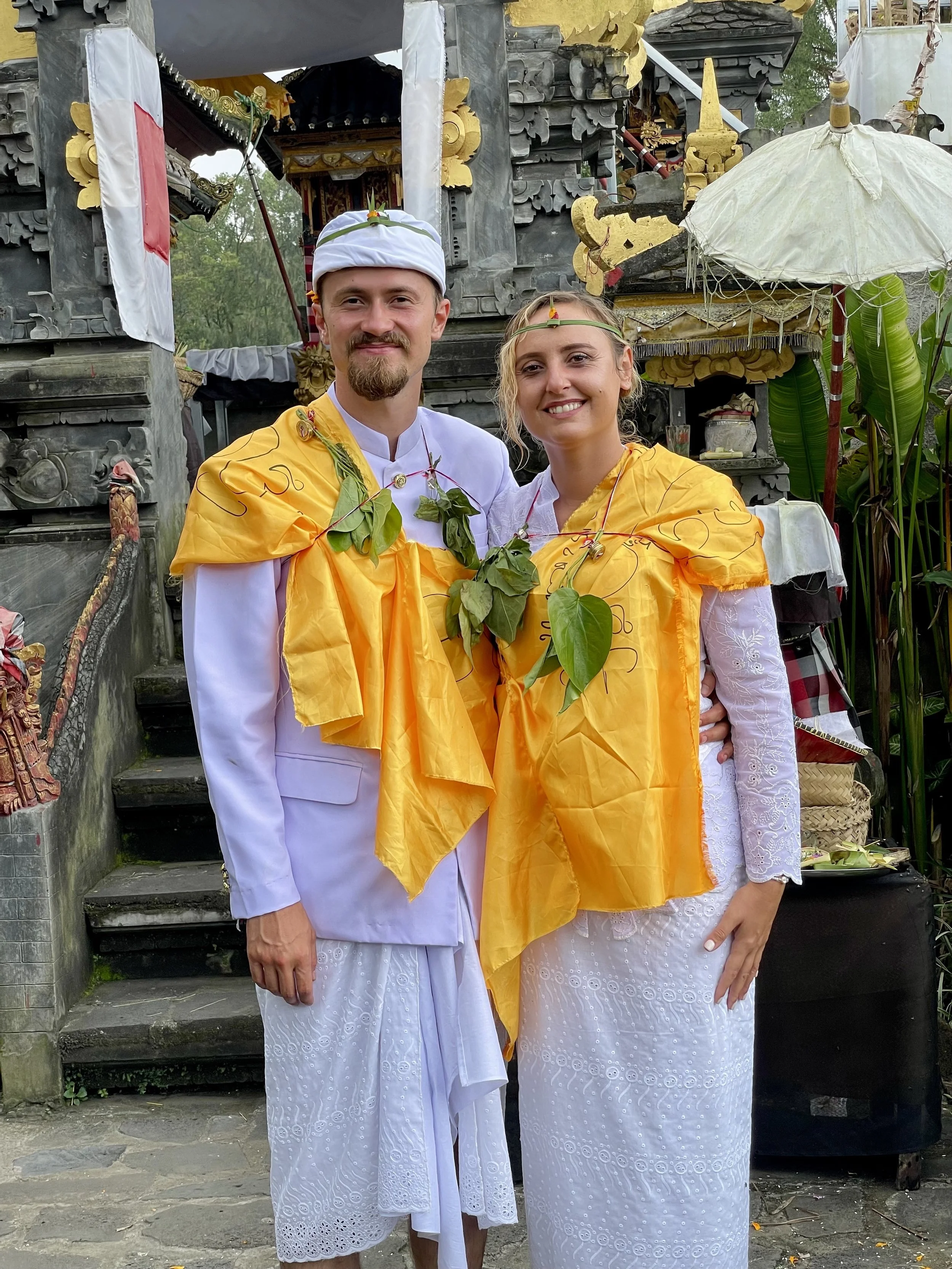
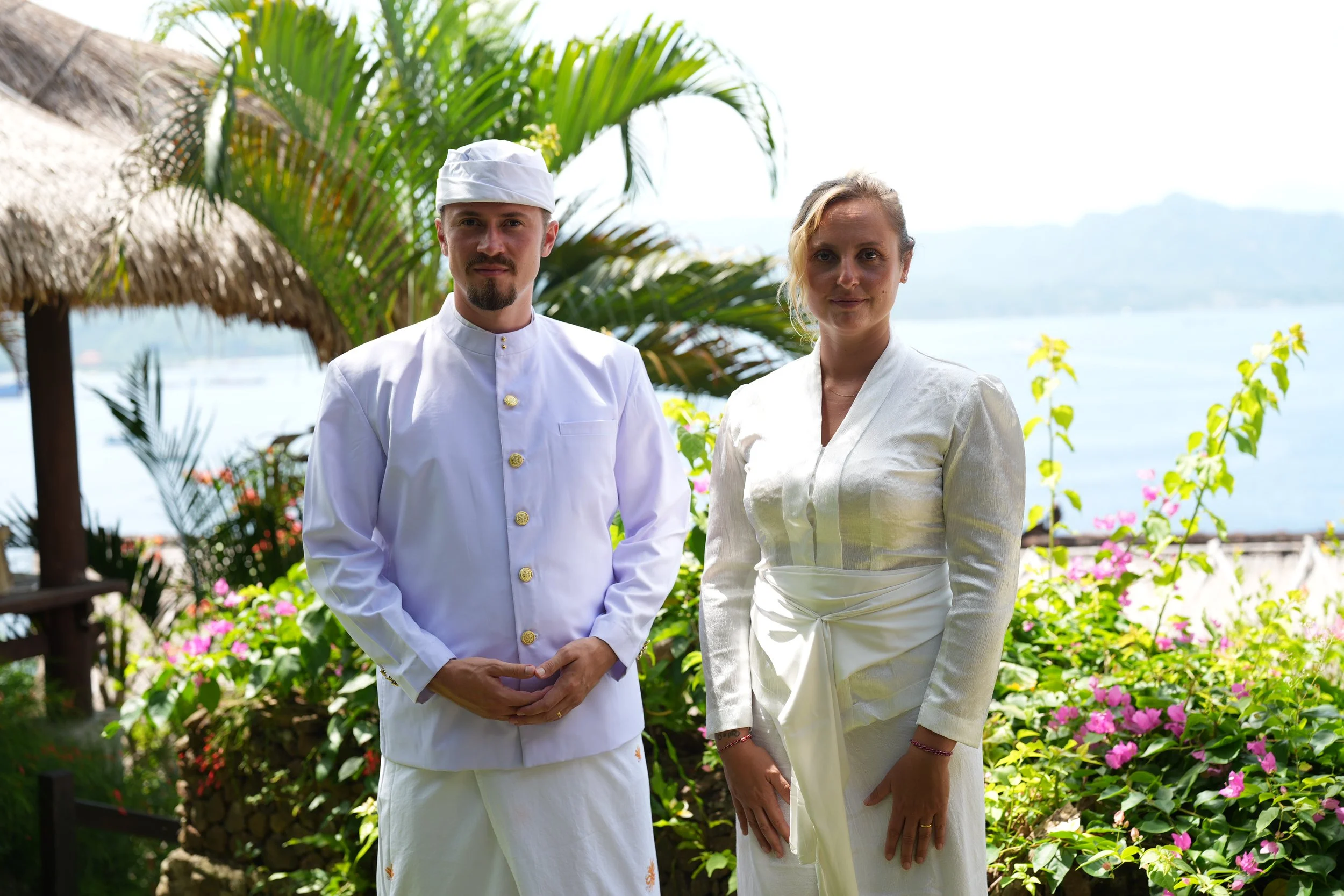
Since we got married and ordained as Priests, or ‘Jero Mangku’ in Bali, we have been asked many times what kind of Priests we have become. In what is officially known as Balinese Hinduism, a lot of different spiritual traditions converge.
First, there is the indigenous wisdom that the universe, all that exists, is conscious, and nature is sacred. Our body is considered a reflection of the universe. Our task is to maintain harmony between the universe, nature, and humans, a concept known as Tri Hita Karana, through positive thought, speech, and behaviour.
What touched us was to realise that we are born from this universe and, therefore, remain in debt to it and to our parents and ancestors for the rest of our lives.
This does not feel like a burden, but gratitude gives purpose and is central to our well-being and happiness.
Hinduism provides much of the theoretical framework, such as the law of cause and effect (karma), truth (dharma), and liberation (moksha). Buddhism is not considered separate, but approaching the truth from a different path, which is why it’s integrated in Balinese tradition, also referred to as Siwa-Buddha.
This resonated with me, having had many interactions with Buddhism since age 9.
The key to Balinese spirituality is understanding that it advocates for balance, therefore integrating many different traditions, from Tantra to local animist traditions, into one bigger whole. There is not one path leading to truth but many, so why not be open?
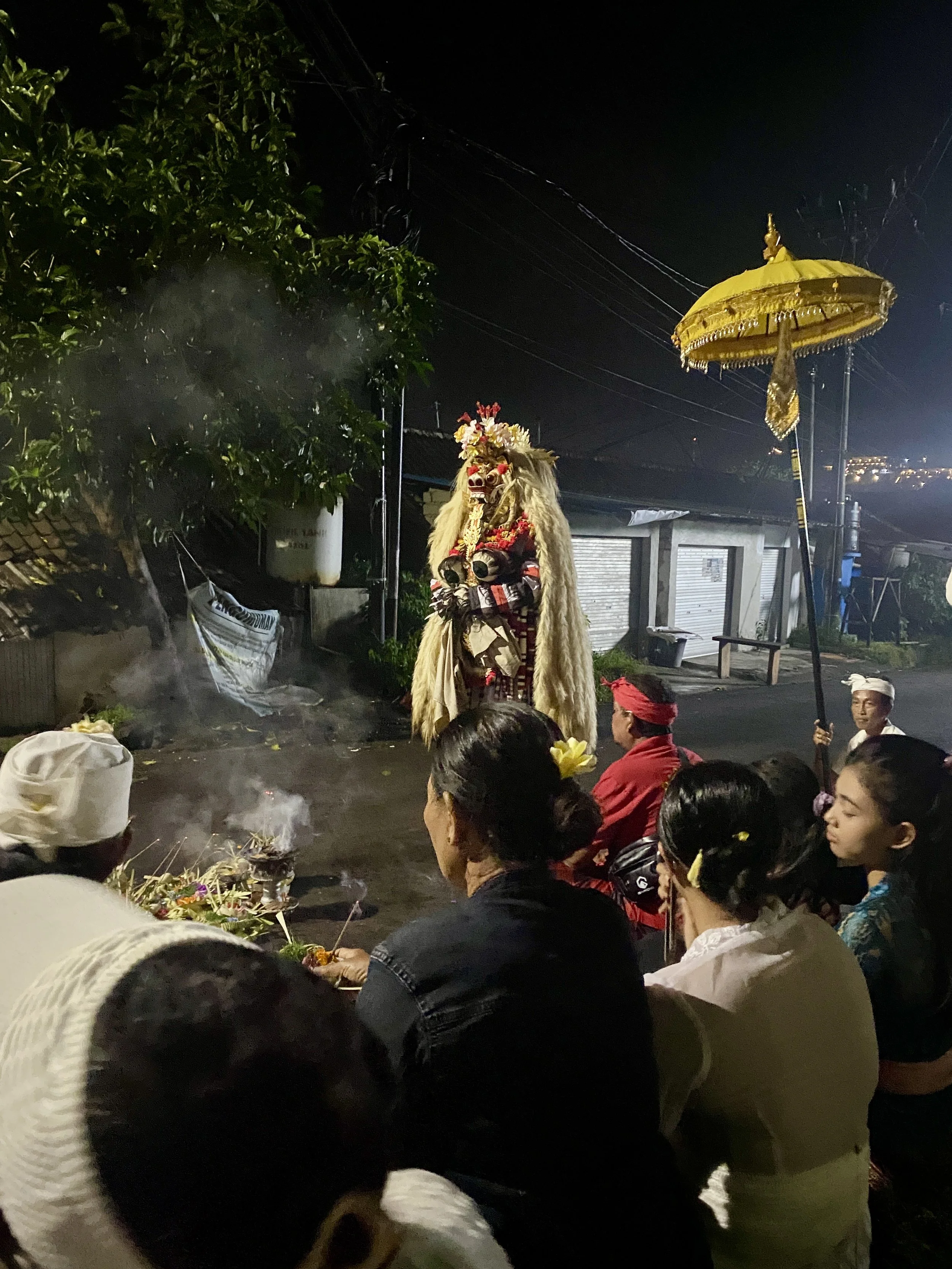
At the heart of our role as Priests is to share this knowledge and serve our communities in connecting with the universe and maintaining harmony. Purification plays a big role in this, and the traditional Melukat ceremony serves that purpose, using Mantra and other tools to make ‘holy water’ with which to cleanse and bless body and soul.
We’ve been studying to conduct the Melukat ceremony, as well as the Mecaruceremony for purification of places, over the last few months.
Our learning was accelerated by the fact that already a dozen people asked us to conduct the ceremony for them on our return to Europe. Not a day has gone by that we haven’t thought of them.
We return to Europe in 10 days, and in 14 days we will have our first ceremony in Rome.
As our beloved teacher likes to say,
Astunkara!
More Articles